Putting money down for your kid now might provide them access to finances that will come in handy in their adult life.
The money might be used for anything, from paying for college to making a down payment on a house or anything in between.
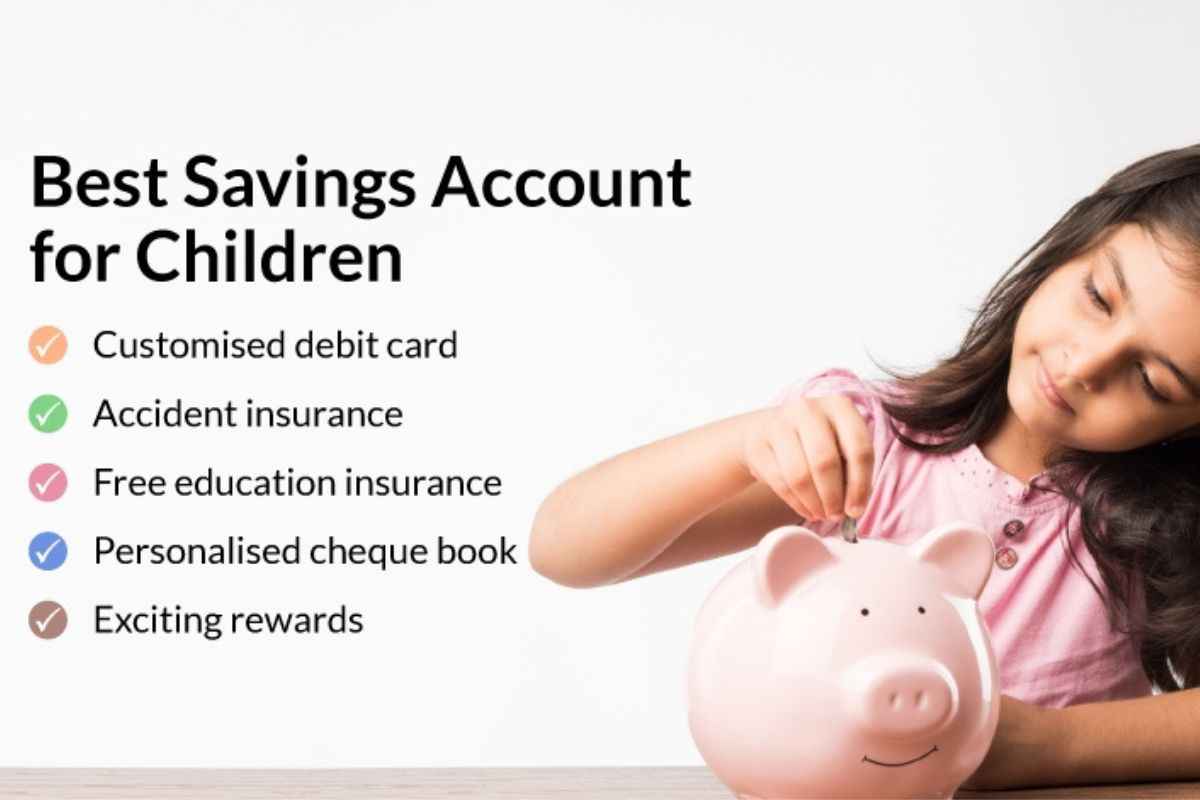
Setting up a children’s savings account is a terrific method to educate them about money and encourage them to develop healthy savings habits.
What Is Children’s Savings Account UK?
A children’s savings account is a special kind available to children under 18. It enables the kid to save money and earn interest.
It may be opened by a parent, guardian, or grandparent; alternatively, the child can open it themselves once they reach the appropriate age.
How Does Children’s Savings Account UK Work?
Children’s savings accounts function similarly to other savings accounts, in which the account holder deposits money and receives interest on the account’s balance.
Even though a savings account may be opened for a kid at any age up to 18, the child must be at least seven years old for the account to be in their name.
The typical minimum deposit required to create a savings account is one pound.
Children’s savings accounts in the UK come in various flavours, including quick access, regular savings, and fixed-rate accounts.
These variations are similar to those seen in adult savings accounts.
One of the most significant distinctions between a savings account for a kid and one for an adult is that there is often no need to pay tax on the interest that is accrued on the account.
If a baby gets more than £100 in interest on money supplied by a parent in any tax year, you must report it to Revenue and Customs.
However, this reporting requirement does not apply in all cases.
Can I open a bank account for a baby?
The procedure for opening may be altered to accommodate children of varying ages.
In most cases, your kid will be able to create the account on their own, and they will likely be able to do it in person if they are above the age of 16.
When dealing with younger consumers, financial institutions often need the presence of a parent as well.
Most of the time, opening a bank account for a child occurs at a branch.
It is not a good idea to go with the first bank that comes to mind when choosing a bank for your child’s savings account since various banks provide varying interest rates and different features for their best child savings account.
What kinds of children’s savings accounts are there?
Children’s savings accounts are available in various formats to accommodate multiple saving methods.
#1. Easy access
You or your kid may deposit and withdraw funds from easy-access savings accounts anytime you need to.
They’re a terrific method for your kid to save pocket money or gift money they may wish to take out and use immediately.
#2. Notice account
A notice children’s savings account entails waiting periods (such as one or three months, for example) before you may access the money in the account, much as notice accounts do for adults.
Compared to quick access accounts, they often provide more excellent interest rates.
#3. Fixed-rate accounts
A fixed-rate children’s savings account locks up your money for a predetermined period that you choose, usually between one and five years.
Your deposit will earn interest at a predetermined rate. Rates are often greater than what you may get from an account with simple access or notice.
#4. Regular savings account
For 12 months, you must deposit a minimum sum into a regular savings account, usually between £10 and £20 every month.
They often provide interest rates even higher than fixed-rate accounts, but you cannot use the funds during the first 12-month term and must frequently open a new account afterwards.
#5. Junior ISAs / Child Trust Funds (CTFs)
Kid Trust Funds and Junior ISAs are examples of tax-free child savings accounts.
For 2022–2025, you may invest up to £9,000 tax-free in a JISA for your kid; but the funds won’t be accessible until they are 18 years old.

7 Best Children’s Savings Accounts UK 2022
#1. HSBC MySavings
When your kid reaches the age of 11, they will be able to create a current account to go along with it, at which point the actual ‘adulting’ can begin.
The account is managed by a worldwide recognized company and offers a good interest rate of 3.2% on balances of up to £3,000.
When you turn 18, your account will automatically be converted into a bank account or savings account, and you won’t have to transfer any money out of your current or savings accounts.
You have to be at least seven years old to open this.
#2. Virgin Money Headstart

With a variable interest rate of 4.06%, Virgin Money delivers the most competitive product to youngsters up to 16, making it the market leader in this age group.
Because it must be opened and handled in-branch, however likely, this option will only be useful to you if there is a branch conveniently located near your home or your place of employment.
You will be responsible for managing the account on behalf of the kid, and the youngster will not be given a debit card; this will allow you to maintain control.
#3. Saffron Building Society Children’s Regular Saver

The interest rate of 3% on deposits of up to £100 is not to be sneezed at, and this is a respectable sum to set aside regularly.
Because it is a local building society, you will only be able to establish an account in person if you are a resident of Hertfordshire, Essex, or Suffolk; otherwise, you will have to do it over the mail.
They assist you on your path by providing you with a savings chart so that you can monitor your progress.
Additionally, the account is an Easy Access account, meaning you have unrestricted access to your funds anytime.
#4. Darlington DS Junior ISA

A JISA choice that has received positive feedback. Only once the youngster reaches the age of 18 will they be able to access it.
To be able to create this account, you need to be a member in good standing, but they offer reasonable prices for individuals as well! This basic account has no extra features, but it’s still excellent.
#5. Principality Dylan Regular Saver
You may deposit up to £150 into the account each month (up to a maximum balance of £5,400). It means that after three years, you would have received £5,671.49 if you had deposited the total amount each month.
Throughout the period, the account must have a balance of at least ten pounds.
You do not need to deposit every month, and you will get a free Money Box. Because this is a fixed-rate bond, you can access your money on the maturity date, which is three years from now.
#6. The Cambridge Building Society First Account

2% on balances between £1 and £100,000; this account is only geared at children under the age of 10 (in fact, you have to be under 10 to open it); nonetheless, you are allowed to withdraw money twice each week.
#7. Spectrum MySavings Youth Account

Spectrum has the best interest rate available, but since it is a credit union, opening an account with it requires joining the organization first.
The procedure is simple, but there is a cost involved.
To become eligible for Spectrum, people must pay membership fees or make gifts to a nonprofit organization linked with Spectrum unless someone in their family is qualified via their employment or geographical location.
In addition, each member must have a savings account with a balance of $25.
How To Choose The Best Child Savings Account?

Your goals for money management and the degree of access you want will determine the best baby bank account that will serve your child’s needs.
The interest rate should be the first item that’s taken into consideration. In general, the greater the interest rate, the better.
But you should keep an eye on how long any promotional rate periods run since the rate may decrease dramatically once the introductory period is through.
There are other factors to think about than only the interest rate. A regular saver could be the best option if you want to motivate your kid to contribute consistently with the money they get in their pocket each week.
A fixed-rate account, in which the holder knows exactly what the return will be after a certain period (for instance, one year), can be the best choice for someone who is putting money aside for a significant purchase that won’t be made for at least a year.
You might consider getting your child a Junior Individual Savings Account (ISA) if you are OK with the fact that the money will be unavailable to them until they are 18. You are eager to strive to achieve the highest return possible.
On the other hand, if you need the money immediately, you should choose an account that allows simple access. This will enable you to get the money when you need it while also helping to develop the practice of saving.
FAQ-
Are children’s accounts tax-free?
Children’s accounts are not tax-free, except for Junior ISAs. Although it’s a frequent misperception, kids must pay taxes on their savings just as adults do. There may be a Personal Savings Allowance for children.
What is the minimum age requirement for opening a children’s savings account?
The minimum age varies, but most banks start at age 0 or have special accounts for minors.
Are the interest rates on children’s savings accounts competitive?
Yes, many banks offer competitive interest rates to encourage savings for children’s future needs.
Can grandparents contribute to a child’s savings account?
In most cases, yes, many accounts allow contributions from family members.
Is the interest earned on children’s savings accounts taxable?
Generally, children’s savings accounts have tax advantages, but it’s advisable to check with the specific bank and tax regulations.
Which bank is best for a child savings account?
Kotak Mahindra Bank, IDFC, and HDFC Banks are best for a child savings account.
Conclusion
For all children born between September 1, 2002, and January 1, 2011, the government will automatically create a Child Trust Fund, often known as a CTF, in their name.
Because the interest rates offered by Child Trust Funds (CTFs) are often lower than those offered by Junior Individual Savings Accounts (Junior ISAs), parents can benefit by switching their child’s CTF to a Junior ISA.