Choosing between savings accounts in the UK is not just about finding the biggest interest rate. Some accounts let you withdraw money whenever you need it, while others offer higher returns if you save regularly or lock your money away for a set period.
The right account depends on how much you have to save, when you might need the money and whether tax will affect your returns. Comparing the Annual Equivalent Rate (AER), withdrawal rules, introductory bonuses and deposit protection can help you find an account that suits your circumstances.
What Are the Best Savings Accounts in the UK?
The best savings account is one that pays a competitive rate while giving you the access and flexibility you need. An easy-access account may suit emergency savings, while a fixed-rate bond can be useful for money you will not need for several months or years.
There is no single account that is best for everyone. Before comparing providers, decide which type of account matches your savings goal.
Here are the main options:
- Easy-access savings accounts: Usually allow withdrawals without advance notice, making them suitable for emergency funds.
- Fixed-rate savings bonds: Pay an agreed rate for a set term, but normally restrict access until maturity or charge for early withdrawal.
- Regular savings accounts: Reward monthly saving, often with a higher headline rate, but limit how much you can pay in.
- Notice accounts: Require you to give notice before withdrawing money.
- Cash ISAs: Pay tax-free interest, subject to ISA rules and the annual allowance.
You can hold more than one type of savings account. For example, you could keep money for unexpected bills in an easy-access account and put savings for a future purchase into a fixed-rate account.
How to Compare Savings Account Interest Rates
The interest rate is an important starting point, but the details behind it determine how much you actually earn.
Compare the AER, Not Just the Headline Rate
AER stands for Annual Equivalent Rate. It shows the annual interest return, taking account of how often interest is paid and compounded. It helps you compare accounts that pay interest at different intervals.
For example, if you deposit £5,000 into an account paying 4% AER and leave the money untouched for a year, you would earn approximately £200 in interest, assuming the rate remains unchanged and before any tax that may apply.
At 4.5% AER, the same balance would earn approximately £225 over a year. That is £25 more.
Use the AER shown in the account’s terms, rather than comparing rates that use different measures. MoneyHelper explains this in its guide to choosing savings products.
Check Whether the Rate Is Fixed or Variable
A fixed rate stays the same for the agreed term. This gives you certainty about the rate, although access may be restricted.
A variable rate can rise or fall. An easy-access account may start with a competitive rate but become less attractive if the provider reduces it.
Also check whether the rate includes a temporary bonus. A bonus may make an account look appealing for the first six or twelve months, but the underlying rate could be much lower afterwards.
Before opening an account, find out when the bonus ends and what happens to your money next. Set a reminder to compare the account again before the introductory period expires.
Which Type of Savings Account Should You Choose?
Your savings goal should guide your choice more than the highest rate in a comparison table.
| Account type | Best suited to | Main drawback |
|---|---|---|
| Easy access | Emergency funds and short-term savings | Variable rates can fall |
| Fixed rate | Money you can leave untouched | Early access may be unavailable or costly |
| Regular saver | Building a monthly saving habit | Monthly deposit limits and account conditions |
| Notice account | Savings you can plan to withdraw later | You must give notice |
| Cash ISA | Savers who want tax-free interest | Rates and access conditions vary |
Easy-Access Accounts for Flexibility
Easy-access savings accounts are useful if you may need your money at short notice. Check that the account genuinely allows the withdrawals you expect: some products marketed as easy access restrict withdrawals or reduce the rate after a certain number.
Compare minimum deposits, maximum balances and how quickly withdrawals reach your current account. These details can matter more than a small difference in AER.
Fixed-Rate Bonds for Predictable Returns
A fixed-rate bond can suit money set aside for a known future expense, such as a house deposit or a planned purchase. You know the rate for the agreed term, which makes returns easier to estimate.
The trade-off is access. Some accounts do not permit early withdrawals, while others impose penalties. Avoid locking away money that you may need for rent, bills, repairs or emergencies.
Compare terms of different lengths and consider what might happen to interest rates before your account matures. A longer fix is not automatically better simply because it pays a higher rate today.
Regular Savers for Monthly Deposits
Regular savings accounts are designed for people who can set aside money each month rather than deposit a large lump sum. They may offer attractive headline rates, but often cap monthly payments and run for a limited period.
Some require you to hold a current account with the same provider. Others reduce interest if you miss payments or make withdrawals.
Check the maximum monthly deposit and calculate how much you could realistically earn. A high rate on a limited monthly balance does not necessarily generate more interest than a lower rate on a large lump sum.
Should You Choose a Cash ISA or a Standard Savings Account?
A Cash ISA pays interest free from UK income tax. Interest on an ordinary savings account may be taxable, depending on your income and available allowances.
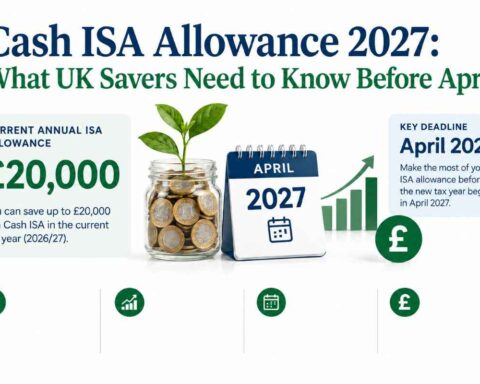
For the 2026/27 tax year, the overall annual ISA subscription allowance is £20,000. You can generally spread this allowance across eligible ISA types, subject to the applicable rules. See the official GOV.UK ISA guidance.
With standard savings accounts, the Personal Savings Allowance generally lets basic-rate taxpayers receive up to £1,000 in savings interest tax-free each tax year. The allowance is £500 for higher-rate taxpayers, while additional-rate taxpayers do not receive one. Your wider tax position can affect the amount you owe.
Compare the net benefit, not just the advertised rate. If you expect to earn little interest and remain within your available allowance, a standard savings account may be competitive. If you expect to exceed the allowance, the tax-free treatment of a Cash ISA may be more valuable.
Check the current rate, withdrawal terms and transfer rules before deciding. The GOV.UK guide to tax on savings interest explains how the rules work.
How to Find Competitive Savings Rates in the UK
Savings rates change, and comparison sites may show different products or rankings. As a practical starting point, check more than one reputable comparison service, then confirm the details with the provider.
Useful places to compare include:
- Moneyfacts Compare for savings rates across account types.
- MoneySavingExpert for comparisons and explanations of account conditions.
- Which? for savings tables and provider information.
- MoneyHelper for guidance on choosing and managing savings accounts.
These services can help you build a shortlist, but always read the provider’s terms before applying. Check eligibility, minimum deposits, maximum balances, access rules and any bonus conditions.
Rates can change quickly. For example, Moneyfacts’ comparison data dated 29 October 2026 showed headline rates reaching 5% for some easy-access accounts and 8% for certain regular savers. Those figures are market snapshots, not guaranteed offers for every saver, and the highest rates may come with limits or conditions.
Check Your Savings Are Protected
Before transferring money, check whether the bank or building society is authorised and whether your deposits qualify for Financial Services Compensation Scheme (FSCS) protection.
Since 1 December 2025, the FSCS deposit protection limit has been £120,000 per eligible person, per authorised firm. This limit applies across eligible accounts held with the same authorised firm, not separately to every account or brand. Some brands share a banking licence.
If you have savings above the limit, consider how your money is spread across authorised firms. You can check the details through the FSCS deposit protection guidance.
Protection is worth checking even when an account offers a particularly attractive rate. A slightly lower return may be preferable if it better matches your needs and the protection arrangements you want.
Common Mistakes When Comparing Savings Accounts
Avoid these mistakes when choosing where to keep your money:
- Chasing the highest headline rate: The account may have a low balance cap or strict conditions.
- Ignoring introductory bonuses: The rate may drop when the bonus expires.
- Locking away emergency money: Early access may be impossible or expensive.
- Overlooking tax: Interest from different standard savings accounts can count towards the same allowance.
- Ignoring the minimum deposit: You may not qualify for the advertised rate with your available balance.
- Forgetting to review your account: Variable rates can fall, so compare again when your provider changes the rate or a bonus ends.
A short review every few months, and whenever your circumstances change, can help you avoid leaving savings in an account that no longer suits you.
Frequently Asked Questions
Which savings account has the highest interest rate in the UK?
There is no permanent winner. The leading rate changes and depends on whether you want easy access, a fixed term, a notice account or a regular saver. Compare current rates and check the conditions before applying.
Is a fixed-rate savings account better than easy access?
Not necessarily. Fixed-rate accounts provide certainty over the agreed term but usually restrict withdrawals. Easy-access accounts offer more flexibility but normally have variable rates. Choose based on when you might need the money.
How much money should I keep in an easy-access account?
Keep enough to cover the unexpected costs you may face and any essential expenses you cannot comfortably delay. The right amount depends on your income, regular bills, job security and other financial commitments.
Do I pay tax on savings interest in the UK?
It depends on your income and allowances. Basic-rate taxpayers generally have a £1,000 Personal Savings Allowance, higher-rate taxpayers have £500, and additional-rate taxpayers have none. Interest in a Cash ISA is generally tax-free.
How often should I compare savings accounts?
Review your account whenever the provider changes the rate, a bonus ends or your savings needs change. Checking periodically can also help you spot better alternatives, but always compare access conditions and eligibility as well as the rate.
Find an Account That Fits Your Savings Plan
The best savings account is not always the one at the top of a comparison table. Start by deciding when you may need the money, compare AER and account conditions, and consider whether a Cash ISA could offer a tax advantage.
Use current comparison tables to identify suitable options, then verify the provider’s terms and FSCS protection before moving your money. A good account should offer a competitive return without getting in the way of your savings goals.